IDS 81650 / LING 83300
Ideals and reality often diverge. If we have made such strides in the last fifty years in many source disciplines of cognitive science individually (computer science, linguistics, mathematics, neuroscience, psychology), why has this not manifested as massive progress in fundamental understanding of the mind? Where is the glorious cognitive utopia promised by our large advances in empirical methods, the scale and availability of data, and the unreasonable effectiveness of engineering tools?
The root of this tension must, at least partially, reside in a distinction between prediction and explanation. It should be obvious to a reasoned thinker that an observation and its cause are two very different objects: this is echoed in the theoretical study of language in the divide between a speaker’s i(nternal)-language — the system for generating and interpreting sentences — from their e(xternalized)-language; the utterances and texts that we can actually record. Here i-language is the intended object of scientific study despite e-language being the paradigmatic (and perhaps necessary) locus of measurement.
Attempts to collapse this distinction are endemic. This has, perhaps, been brought to a head by modern so-called AI systems whose application draws no such distinction between predicting external behavior and explaining its internal cause. This “collapsed” view, in fact, has a long history, as Celsus described a prominent school of Greek physicians nearly two thousand years ago: “[this group does] indeed accept evident causes as necessary; but they contend that inquiry about obscure causes and natural actions is superfluous, because nature is not to be comprehended.” But if messy, stochastic observations are all we have, then why bother?
In this seminar we take an optimistic view: in order to treat the study of cognition as a mature science we must re-emphasize a commitment to the idea that the world (mind included) has a mechanistic basis that can be understood as such. This seminar will cover a mechanistic understanding of mental representations in language. We will explore how factors such as perception, memory, learning, categorization, and conceptual development interact with and constrain the properties of human language and inference, including its acquisition, processing, and variation.
Instructors
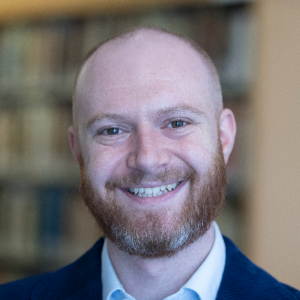
Spencer Caplan is an Assistant Professor of Linguistics and Cognitive Science at the CUNY Graduate Center where he directs the Psycholinguistics *Lab and is a core contributor to (and interim director of) the master’s program in computational linguistics. Caplan is a computational-, experimental-, and psycho-linguist whose research contributes towards a mechanistic understanding of language processing, acquisition, and knowledge in the mind.
Prior to joining The Graduate Center, Caplan previously served as a fellow in the Center for Perceptual Systems at the University of Texas at Austin and faculty in Computer Science at Swarthmore College. His research has been published in prestigious journals across cognitive science and language including Proceedings of the National Academy of Science, Cognition, Psychological Science, First Language, and Glossa.
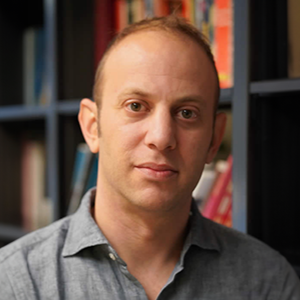
Eric Mandelbaum is the Ruth Printz O’Hare ’52 Professor, holding appointments in the department of Philosophy at Baruch College, as well as the departments of Philosophy & Psychology at The Graduate Center, where he is also the Director of the Cognitive Science Program. He researches foundational issues in cognitive science, mostly pertaining to cognitive architecture and the structure of thought.
Before joining CUNY, he was the Mind/Brain/Behavior fellow at Harvard as a member of the Mind/Brain/Behavior Program and the Department of Philosophy; before that, he was the ACLS New Faculty Fellow at Yale in the Department of Philosophy and Cognitive Science program; and before that he was a James Martin Fellow at Oxford University in the Faculty of Philosophy, St. Catherine’s College, the Future of Humanity Institute, the Institute of Science and Religion, and the Oxford Martin 21st Century School. He has won grants and awards from foundations such as the ACLS/Mellon and the NEH, including the Stanton Prize from the Society of Philosophy & Psychology, the Glushko Prize from the Cognitive Science Society, and the Philosopher’s Annual Award. In the 2026-2027 academic year he will be the Laurance S. Rockefeller Visiting Professor for Distinguished Teaching in the University Center for Human Values and the Department of Philosophy.