IDS 81640
This seminar proposes an interdisciplinary exploration of the ecologies of displacement in Latin America, from the colonial period to the first half of the 20th century. Drawing on colonial theory, environmental history, and mobility studies, we will examine how the movement of people, ideas, and objects in contexts of territorial expansion has shaped the relationships between humans, animals, and landscapes. We will pay special attention to the production and transformation of zoological and botanical knowledge, analyzing how transit and exchange—driven by economic interests ranging from natural classification to tourism—have influenced representations of the natural world and the inscription of nature in discourses of exploration, exploitation, and resistance.
To this end, we will work with a wide variety of materials: from travel and conquest chronicles to religious, political, and economic treatises, including ethnographic and autoethnographic texts, costumbrista literature, herbariums and bestiaries, travel accounts, maps, and other documentary repositories. These records not only allow us to reconstruct displacement itineraries but also to examine the construction of archives and counter-archives around ecological relationships, highlighting the tensions between textuality and visuality in the cultural production of these journeys. This perspective will enable us to reflect on the ecology of knowledge and mobility, exploring the role of gender and displacement in shaping knowledge, as well as the influence of Indigenous epistemologies on colonial and postcolonial representations of the environment.
The seminar will also incorporate an analysis of material culture and sensory history, considering how artifacts, textiles, and museum objects embody histories of movement, adaptation, and loss. We will explore how Indigenous knowledge systems engaged with colonial classifications, sometimes resisting and sometimes transforming European taxonomies. Gendered experiences of mobility and ecological encounters will be a central theme, prompting discussions on how women and marginalized groups contributed to or contested dominant narratives of exploration and natural classification.
Instructors

Víctor Sierra Matute is Assistant Professor of Spanish and Comparative Literature at Baruch College, CUNY, and a Fellow of the Wolf Humanities Center at the University of Pennsylvania (2025–26). A scholar of colonial studies, his work examines the material and sensory foundations of imperial culture across transoceanic contexts. He is the author of the forthcoming book A Sense of Empire: Perceptual and Material Foundations of Early Modern Iberian Colonialism and editor of Soundscapes of the Early Modern Hispanophone and Lusophone Worlds (Routledge, 2025) and the special issue “The Past Awakened: Cultural Reimagination in the Global Hispanophone” (Arizona Journal of Hispanic Cultural Studies). His research has received support from the Huntington Library, PSC-CUNY, the Cervantes Society of America, and the Society for Renaissance and Baroque Hispanic Poetry. He currently serves as Interim Director of the Initiative for the Study of Latin America (ISLA) at Baruch and has served on the PMLA Advisory Committee and in elected roles within the Modern Language Association.
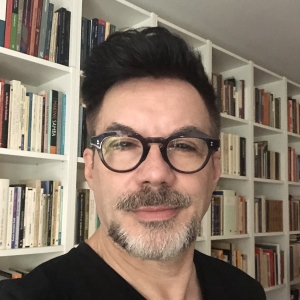
Fernando Degiovanni is Professor of Latin American Literature and Culture at The Graduate Center, CUNY, and past president of the Instituto Internacional de Literatura Iberoamericana (2020–24). A literary scholar and cultural critic, his research reimagines Latin American modernism through avant-garde experiments with the body, ecology, and the archive. He is the award-winning author of Los textos de la patria and Vernacular Latin Americanisms, and editor of Latin American Literature in Transition, 1870–1930 (Cambridge University Press). His work has been supported by fellowships and visiting appointments at the Freie Universität Berlin, the University of Perugia, the National University of Athens, and the Emily Harvey Foundation in Venice. At The Graduate Center, he integrates research with mentorship, advancing interdisciplinary doctoral work and innovative initiatives in the public humanities.