Mental Representation in Mind and Language: Against Collapse
IDS 81650 / LING 83300
Ideals and reality often diverge. If we have made such strides in the last fifty years in many source disciplines of cognitive science individually (computer science, linguistics, mathematics, neuroscience, psychology), why has this not manifested as massive progress in fundamental understanding of the mind? Where is the glorious cognitive utopia promised by our large advances in empirical methods, the scale and availability of data, and the unreasonable effectiveness of engineering tools?
The root of this tension must, at least partially, reside in a distinction between prediction and explanation. It should be obvious to a reasoned thinker that an observation and its cause are two very different objects: this is echoed in the theoretical study of language in the divide between a speaker’s i(nternal)-language — the system for generating and interpreting sentences — from their e(xternalized)-language; the utterances and texts that we can actually record. Here i-language is the intended object of scientific study despite e-language being the paradigmatic (and perhaps necessary) locus of measurement.
Attempts to collapse this distinction are endemic. This has, perhaps, been brought to a head by modern so-called AI systems whose application draws no such distinction between predicting external behavior and explaining its internal cause. This “collapsed” view, in fact, has a long history, as Celsus described a prominent school of Greek physicians nearly two thousand years ago: “[this group does] indeed accept evident causes as necessary; but they contend that inquiry about obscure causes and natural actions is superfluous, because nature is not to be comprehended.” But if messy, stochastic observations are all we have, then why bother?
In this seminar we take an optimistic view: in order to treat the study of cognition as a mature science we must re-emphasize a commitment to the idea that the world (mind included) has a mechanistic basis that can be understood as such. This seminar will cover a mechanistic understanding of mental representations in language. We will explore how factors such as perception, memory, learning, categorization, and conceptual development interact with and constrain the properties of human language and inference, including its acquisition, processing, and variation.
Instructors
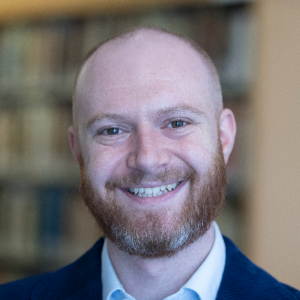
Spencer Caplan is an Assistant Professor of Linguistics and Cognitive Science at the CUNY Graduate Center where he directs the Psycholinguistics *Lab and is a core contributor to (and interim director of) the master’s program in computational linguistics. Caplan is a computational-, experimental-, and psycho-linguist whose research contributes towards a mechanistic understanding of language processing, acquisition, and knowledge in the mind.
Prior to joining The Graduate Center, Caplan previously served as a fellow in the Center for Perceptual Systems at the University of Texas at Austin and faculty in Computer Science at Swarthmore College. His research has been published in prestigious journals across cognitive science and language including Proceedings of the National Academy of Science, Cognition, Psychological Science, First Language, and Glossa.
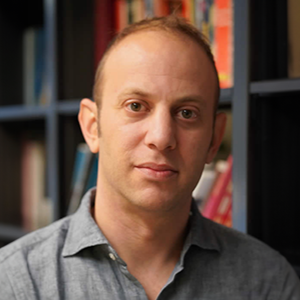
Eric Mandelbaum is the Ruth Printz O’Hare ’52 Professor, holding appointments in the department of Philosophy at Baruch College, as well as the departments of Philosophy & Psychology at The Graduate Center, where he is also the Director of the Cognitive Science Program. He researches foundational issues in cognitive science, mostly pertaining to cognitive architecture and the structure of thought.
Before joining CUNY, he was the Mind/Brain/Behavior fellow at Harvard as a member of the Mind/Brain/Behavior Program and the Department of Philosophy; before that, he was the ACLS New Faculty Fellow at Yale in the Department of Philosophy and Cognitive Science program; and before that he was a James Martin Fellow at Oxford University in the Faculty of Philosophy, St. Catherine’s College, the Future of Humanity Institute, the Institute of Science and Religion, and the Oxford Martin 21st Century School. He has won grants and awards from foundations such as the ACLS/Mellon and the NEH, including the Stanton Prize from the Society of Philosophy & Psychology, the Glushko Prize from the Cognitive Science Society, and the Philosopher’s Annual Award. In the 2026-2027 academic year he will be the Laurance S. Rockefeller Visiting Professor for Distinguished Teaching in the University Center for Human Values and the Department of Philosophy.
Nature in Transit: Ecologies of Displacement in Latin America | Spring 2026 Team-Taught Course
IDS 81640
This seminar proposes an interdisciplinary exploration of the ecologies of displacement in Latin America, from the colonial period to the first half of the 20th century. Drawing on colonial theory, environmental history, and mobility studies, we will examine how the movement of people, ideas, and objects in contexts of territorial expansion has shaped the relationships between humans, animals, and landscapes. We will pay special attention to the production and transformation of zoological and botanical knowledge, analyzing how transit and exchange—driven by economic interests ranging from natural classification to tourism—have influenced representations of the natural world and the inscription of nature in discourses of exploration, exploitation, and resistance.
To this end, we will work with a wide variety of materials: from travel and conquest chronicles to religious, political, and economic treatises, including ethnographic and autoethnographic texts, costumbrista literature, herbariums and bestiaries, travel accounts, maps, and other documentary repositories. These records not only allow us to reconstruct displacement itineraries but also to examine the construction of archives and counter-archives around ecological relationships, highlighting the tensions between textuality and visuality in the cultural production of these journeys. This perspective will enable us to reflect on the ecology of knowledge and mobility, exploring the role of gender and displacement in shaping knowledge, as well as the influence of Indigenous epistemologies on colonial and postcolonial representations of the environment.
The seminar will also incorporate an analysis of material culture and sensory history, considering how artifacts, textiles, and museum objects embody histories of movement, adaptation, and loss. We will explore how Indigenous knowledge systems engaged with colonial classifications, sometimes resisting and sometimes transforming European taxonomies. Gendered experiences of mobility and ecological encounters will be a central theme, prompting discussions on how women and marginalized groups contributed to or contested dominant narratives of exploration and natural classification.
Instructors

Víctor Sierra Matute is Assistant Professor of Spanish and Comparative Literature at Baruch College, CUNY, and a Fellow of the Wolf Humanities Center at the University of Pennsylvania (2025–26). A scholar of colonial studies, his work examines the material and sensory foundations of imperial culture across transoceanic contexts. He is the author of the forthcoming book A Sense of Empire: Perceptual and Material Foundations of Early Modern Iberian Colonialism and editor of Soundscapes of the Early Modern Hispanophone and Lusophone Worlds (Routledge, 2025) and the special issue “The Past Awakened: Cultural Reimagination in the Global Hispanophone” (Arizona Journal of Hispanic Cultural Studies). His research has received support from the Huntington Library, PSC-CUNY, the Cervantes Society of America, and the Society for Renaissance and Baroque Hispanic Poetry. He currently serves as Interim Director of the Initiative for the Study of Latin America (ISLA) at Baruch and has served on the PMLA Advisory Committee and in elected roles within the Modern Language Association.
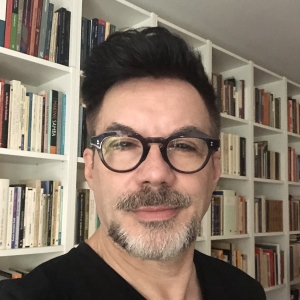
Fernando Degiovanni is Professor of Latin American Literature and Culture at The Graduate Center, CUNY, and past president of the Instituto Internacional de Literatura Iberoamericana (2020–24). A literary scholar and cultural critic, his research reimagines Latin American modernism through avant-garde experiments with the body, ecology, and the archive. He is the award-winning author of Los textos de la patria and Vernacular Latin Americanisms, and editor of Latin American Literature in Transition, 1870–1930 (Cambridge University Press). His work has been supported by fellowships and visiting appointments at the Freie Universität Berlin, the University of Perugia, the National University of Athens, and the Emily Harvey Foundation in Venice. At The Graduate Center, he integrates research with mentorship, advancing interdisciplinary doctoral work and innovative initiatives in the public humanities.
Technology Publics and Futures: Toward Justice | Spring 2026 Team-Taught Course
IDS 81660
As we become more reliant on and are required to use technologies in our work and lives in the 21st century, how may we center justice? Towards intentional practice and praxis, this course will consider questions of accessibility and publics, through the autoethnographic lens of students’ own research projects. We will think through questions such as: What is the importance of technology equity and access, in this moment and in the future? Why should we care? Many examples exist of the ways that technologies may help or hinder us and our communities, but how may we resist preordained technological futures and imagine more just technologies and a more equitable world?
Course material will be sourced collectively and may include pieces by: Audrey Watters, Data & Society, Jessica Marie Johnson, Kelly Baker Josephs, The Library Freedom Project, Roopika Risam, Ruha Benjamin, Safiya Noble, and Shalini Kantayya.
Instructors
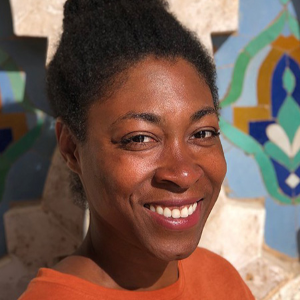
Javiela Evangelista is an Associate Professor in the African American Studies Department. As a public anthropologist she engages in participatory research that counters inequalities, at the intersections of citizenship and racialization in the Caribbean and the African Diaspora. Evangelista is developing her book manuscript, an ethnographic analysis of the largest case of mass statelessness in the western hemisphere, the contemporary denationalization of Dominicans of Haitian descent in Dominican Republic. Support has been received by Harvard University’s Mahindra Humanities Center, Andrew Mellon Foundation, and Social Science Research Council. Her work has been featured at the Venice Biennale and in the Publication of Afro-Latin/American Research Association (PALARA), National Political Science Review and Interdisciplinary Team Teaching (Palgrave). She is a founding member of the collective We Are All Dominican organizing against statelessness.
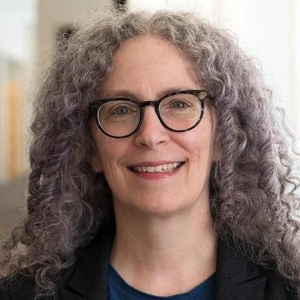
Maura Smale is the executive chief librarian of the Graduate Center. She was previously the chief librarian and a professor at City Tech, where she worked with library faculty and staff to empower and support City Tech students, faculty, and staff in their academic pursuits. She holds a Ph.D. in anthropology from New York University and an MLIS from Pratt Institute. She served as project director for the U.S. Department of Education Title V grant-funded project A Living Laboratory and co-director of the City Tech OpenLab. She is also a member of the steering committee of the CUNY Games Network. Her research interests include undergraduate academic culture, game-based learning, open educational technologies, scholarly communications, and critical librarianship.