On October 15, 2026, the Tradition, Creativity, and AI: Reimagining Culture in a Digital Age webinar brought together scholars, students, and members of the broader academic community to explore how emerging technologies, including artificial intelligence (AI), are reshaping cultural preservation, artistic creativity, and our understanding of tradition in the digital era. Hosted by the Futures Initiative at the CUNY Graduate Center, the event featured an engaging conversation between Nan Jia, Futures Initiative Graduate Fellow and doctoral researcher in computer science, and Mari Abe Kole of Hunter College, followed by an interview-style discussion exploring the challenges and opportunities at the intersection of tradition and technology.
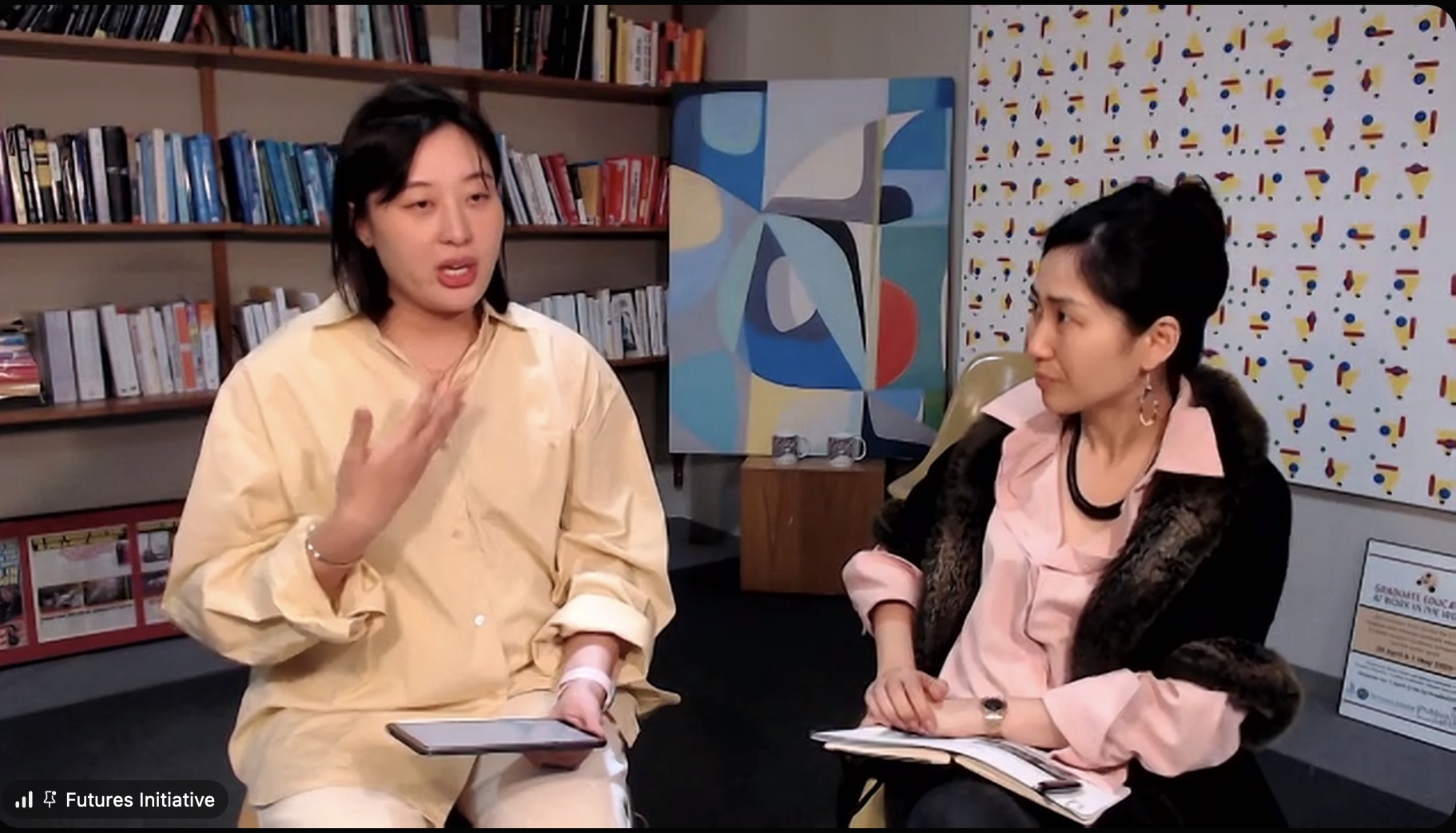
The first half of the webinar featured presentations highlighting distinct yet complementary approaches to preserving and reimagining cultural traditions through technology.
Nan introduced research exploring the use of artificial intelligence (AI) and machine learning (ML) in symbolic music analysis and generation. Through examples drawn from historical musical traditions, the presentation demonstrated how computational methods can help scholars study patterns in musical compositions, reconstruct incomplete works, and explore questions surrounding creativity, authorship, and cultural preservation. Building on these examples, the presentation also encouraged participants to think critically about the strengths and limitations of generative AI as a tool for engaging with cultural heritage.
Mari then shared her work developing the VR-TeaRoom, an immersive learning environment designed to introduce students to Japanese tea culture. Drawing on her experience teaching tea ceremony courses at Hunter College, she discussed how virtual reality can serve as a bridge between traditional cultural practices and contemporary learning environments. Rather than attempting to replicate the tea ceremony experience exactly, the VR-TeaRoom invites students to reflect on what technology can and cannot convey about embodied cultural knowledge, creating new opportunities for critical inquiry and discussion.
Together, the presentations demonstrated that technology can function not only as a tool for preservation, but also as a catalyst for new forms of learning, interpretation, and engagement with cultural traditions.
The second half of the webinar centered on a conversation between the two presenters, structured around questions of authenticity, innovation, and education. Drawing from their respective fields in computer science and the humanities, they reflected on what motivates interdisciplinary work and how technology can be thoughtfully integrated into studies of culture and tradition.
A recurring theme was the tension between technological innovation and cultural authenticity. While digital tools can broaden access to cultural knowledge and create new educational opportunities, both speakers emphasized the importance of maintaining respect for historical context, lived experience, and community knowledge. The discussion highlighted the need to view technology not as a replacement for tradition, but as one of many tools that can support deeper engagement with cultural practices.
The conversation also focused on the role of education in preparing future generations. Participants explored how interdisciplinary approaches can help students develop both technical literacy and cultural awareness, equipping them to navigate an increasingly digital world while remaining attentive to questions of heritage, meaning, and human connection.
The webinar illustrated the value of bringing together perspectives from the humanities and technology to address shared questions about preservation, creativity, and learning. Although the projects discussed employed very different tools, from machine learning models to virtual reality environments, both underscored a common goal: helping future generations engage meaningfully with cultural traditions while adapting to a rapidly changing digital landscape.
During the Q&A session, participants raised thoughtful questions about some of the most debated issues surrounding artificial intelligence, including whether AI systems can genuinely create something new and creative or whether they primarily recombine patterns learned from existing data. The discussion also explored how AI models handle missing information and whether generated outputs are based on new knowledge or previously observed examples. In response, the speakers explained that most machine learning approaches infer missing values from patterns found in observed data rather than accessing unknown information. AI-generated outputs may appear novel, but they are generally constructed from relationships learned during training. The conversation then turned to the nature of creativity itself. Participants reflected on the fact that creativity is often subjective, even when evaluating works produced by humans. What one person considers innovative or original may be interpreted differently by another, making it difficult to establish a universal definition of creativity. Rather than arriving at a definitive answer, the discussion highlighted how questions of originality, authorship, and creative expression remain relevant for both human creators and AI-generated works.
By fostering dialogue across disciplines, the Tradition, Creativity, and AI webinar exemplified the Futures Initiative’s commitment to innovative, public-facing scholarship that encourages critical reflection on the relationship between technology, culture, and education. The lively audience discussion further demonstrated the value of creating spaces where complex technological questions can be examined through humanistic, cultural, and educational perspectives. in the building, behind the speaker’s pulpit. The evening event was titled “Why Can’t We Breathe? Fighting Environmental Racism in the Bronx” and we had the pleasure of hosting two guest speakers from that very borough, Odalys Burgoa and Alicia Grullón.